
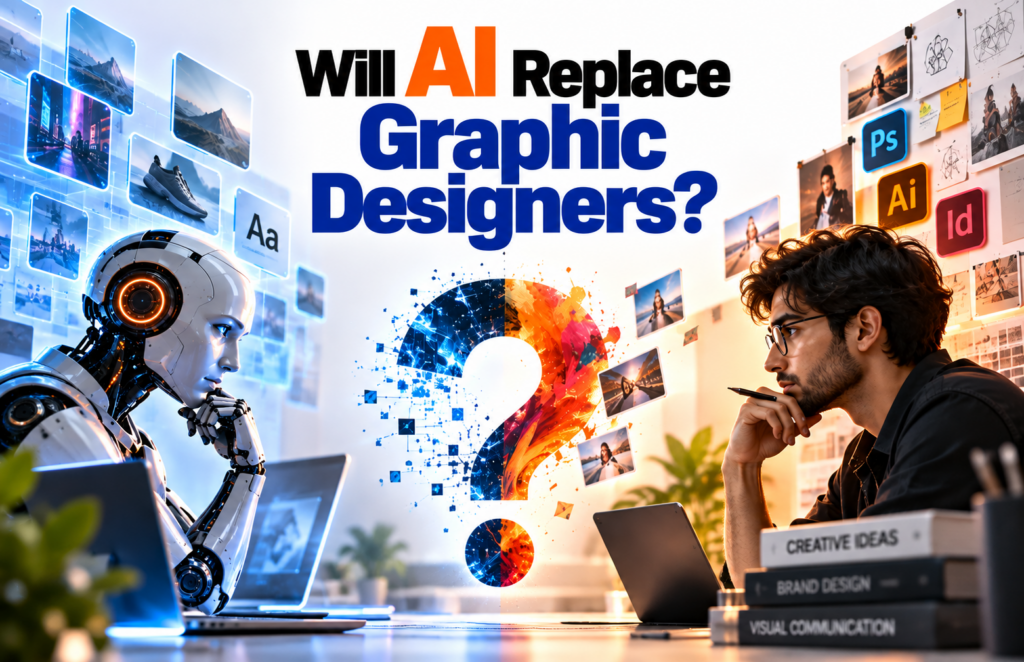
Graphic design is at a turning point and one question is on the table: Will AI take the place of graphic designers? AI can now generate images, offer layouts and complete basic tasks in seconds. That has tangible good aspects, such as quicker work, and creative support, but tangible concerns also about jobs, originality and ethics.
This guide examines both the positive and negative aspects of AI in graphic design, with the Ghibli craze as a practical example and its community’s response on Reddit.
The Evolution of AI in Graphic Design
AI started with basic software jobs, such as modifying layouts. Eventually, it learned to do more creative things as well: creating images, proposing design elements and developing complex images.
This was brought to the next level by deep learning and neural networks. Now, AI can generate good designs in a matter of seconds. The progress made routine work easier, but also brought up some important questions:
- Are we replacing the personal touch with efficiency?
- What level of creativity do we want to pass on to automation?
- Where is ethics and originality in this?
- Now designers have to juggle between two: new technology and safeguarding distinctiveness of human made works.
Designers now have to balance two things: using new technology and protecting what makes human-made work distinctive.
The Role of AI in Graphic Design Today
Today, AI is a practical tool in many design workflows. It takes care of repetitive tasks so designers can spend more time on creative thinking. It also brings its own challenges, which we cover below.
AI Is Here to Assist, Not to Replace
Can AI do graphic design? It can handle parts of it. AI tools are good at time-consuming jobs like resizing images, adjusting color palettes, and suggesting layout variations. This gives designers more time for ideas and strategy. By taking over routine work, AI supports human creativity instead of replacing it.
Treat AI as a Helpful Assistant, Not the Boss
The real value of AI comes from using it responsibly. Designers should keep a human-first approach that protects insight and emotional depth. In practice, that means using AI as a tool that adds to their skills without overruling their creative vision. Ethical use, continuous learning, and good judgment keep AI supporting design instead of threatening it.
AI Design Tools Designers Use Today
Many designers already use AI design tools every day. They generally fall into four types:
- Image generators that create visuals from text prompts
- Layout and template assistants that suggest designs for social posts, presentations, and ads
- Editing tools that remove backgrounds, extend images, or retouch photos
- Idea and copy helpers that support brainstorming and early concepts
Used well, these tools save hours. The final call on what looks right and fits the brand should still stay with the designer.
AI vs Graphic Designers: What Each Does Best
| AI | Graphic Designers | |
| Speed | Creates drafts in seconds | Slower, but with purpose |
| Repetitive tasks | Excellent | Time-consuming |
| Original ideas | Mixes existing styles | Creates new concepts |
| Brand understanding | Limited | Deep and strategic |
| Emotion and storytelling | Surface level | Strong human connection |
AI vs graphic designers isn’t really a contest. The best results come when the two work together.
Can AI take the place of Graphic Designers?
This question is important for the creative industries in general. The true answer is “it depends on weighing the opportunities against the risks.
Opportunities
Reskilling for innovation: AI provides designers with an opportunity to adopt new skills and experiment with fresh concepts.
Cooperation and enhancement: AI can be used as a tool to help with routine tasks, allowing designers to dedicate more time to creative planning.
Downsides
- Job displacement: Some people are hopeful but others are concerned that the repetitive design work may cease to exist, as may the jobs.
- Too much technology: Excessive use of AI can lead to a lack of creativity and similar designs.
- Ethical and copyright concerns: The creation of AI-generated artwork has posed questions regarding its originality, copyright, and the utilization of existing works.
- Quality control: Computers can be insensitive to the subtleties of human art, making a brand’s personality weaker.
The Future of Graphic Design
The future of graphic design will most likely be a partnership between designers and AI.
- Routine work gets automated. Resizing, formatting, and basic variations will be handled by AI.
- Strategy and ideas matter more. Designers who can think, research, and tell stories will stand out.
- AI skills become standard. Guiding AI tools will be a normal part of the job, like learning any design software.
- Original work becomes more valuable. As AI content grows, truly unique work will stand out.
- Clearer rules will develop. Expect more guidelines on copyright, credit, and responsible AI use.
How Designers Can Stay Ahead
- Use AI for routine tasks and keep the big creative decisions human.
- Add your own style and voice to AI output.
- Build skills AI can’t copy: research, empathy, strategy, and storytelling.
- Choose tools that are open about how they were trained.
Conclusion
AI in graphic design brings both exciting possibilities and real problems. With its speed, data-driven tools, and trends like Ghibli AI, many people now ask whether AI can do graphic design in a way that truly improves creativity while respecting ethics. The risks are real: job changes, ethical concerns, and a lack of original ideas.